
Scope / Limitations
This note describes planning checkpoints. Regulatory requirements, data residency and security controls must be verified by your compliance and IT/security team.
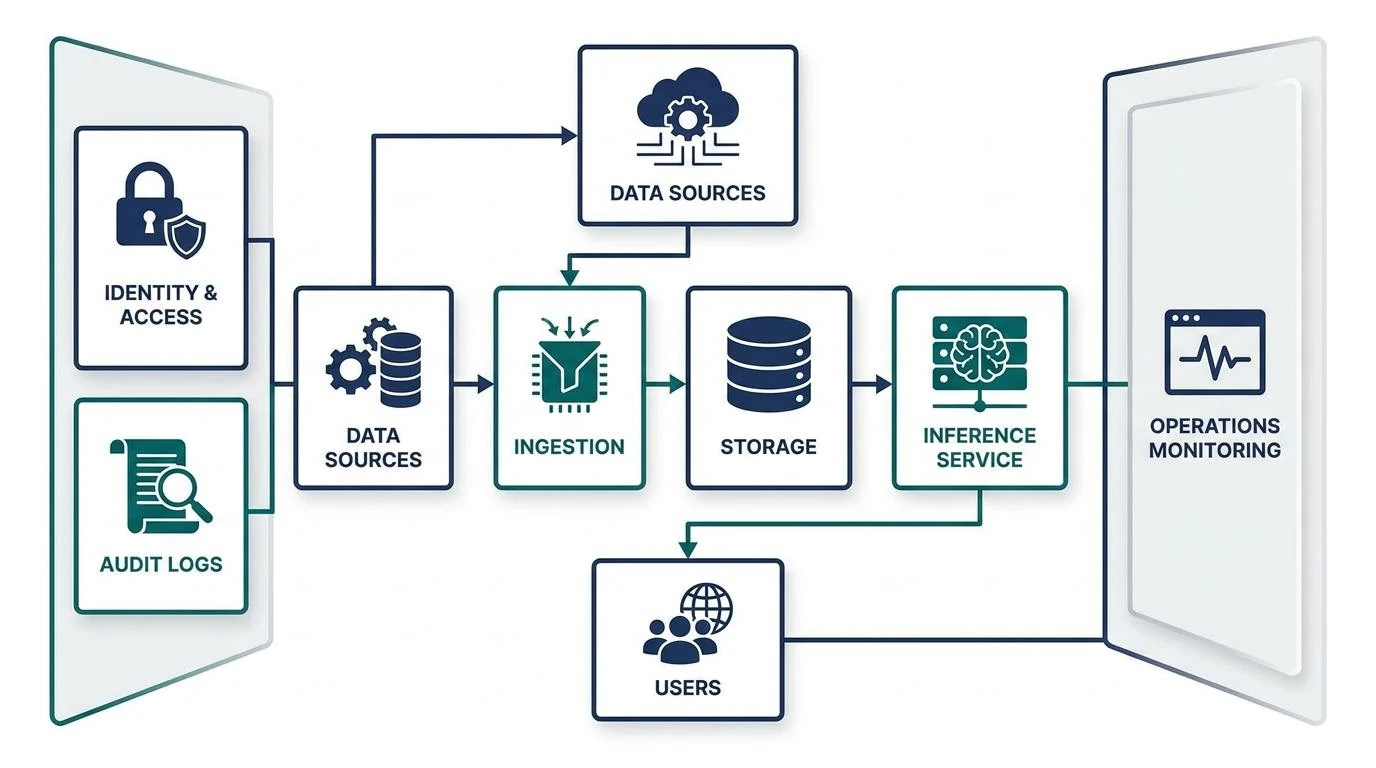
1) Define what “private” means in your context
- Private inference only vs private training/fine-tuning.
- Air-gapped vs controlled internet egress (updates, monitoring).
- Where data is stored and who can access it.
2) Map the data path and storage
| Item | Questions to answer | Output |
|---|---|---|
| Ingestion | What sources? How often? Batch vs streaming? | Bandwidth + schedule |
| Storage | Where is data stored (NAS/local/object)? Retention policy? | Capacity + IOPS |
| Serving | Who calls the model? APIs? Latency targets? | Compute sizing |
3) Identity, access and audit
- SSO / local users, role-based access and tenant separation if needed.
- Logging: request logs, admin actions, model/version changes.
- Secrets handling: avoid hard-coded credentials; define rotation and backup.
4) Operations: updates, rollback and monitoring
- Update cadence (model/runtime/security patches) and who approves changes.
- Rollback plan and “known good” model versions.
- Monitoring: GPU/CPU/memory, storage, temperature, and service health.
5) Translate planning into a procurement brief
Example brief
Users: 50 · Use: RAG + internal docs · Data: 5TB NAS · Latency: <1s · Access: SSO + RBAC · Deployment: on-prem · Ops: monthly updates with rollback